
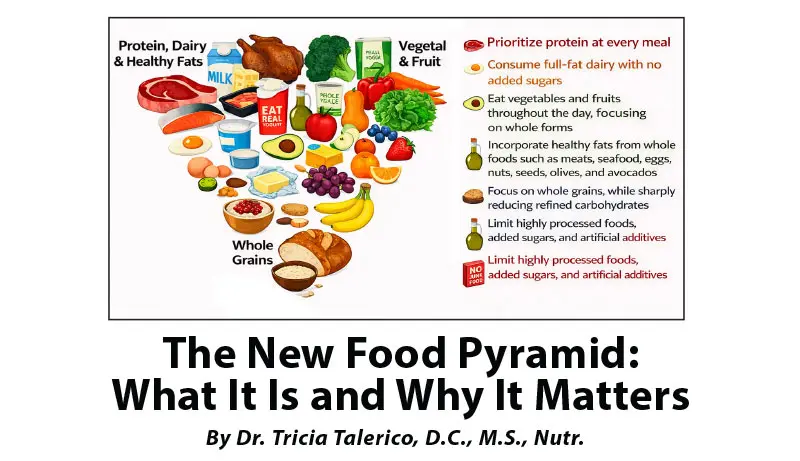
In 2026, the U.S. Dietary Guidelines reintroduced the food pyramid—but with a significant update: it’s now inverted. This modern version reflects what current research has been showing for years—health starts with whole, nutrient-dense foods, not processed staples.
Unlike the traditional pyramid that placed grains at the foundation, the new model prioritizes vegetables and fruits as the base, especially non-starchy vegetables like leafy greens and cruciferous options. These foods provide essential nutrients while supporting blood sugar balance and reducing inflammation.
Healthy fats have also been redefined. Once minimized, unsaturated fats from foods like olive oil, nuts, seeds, avocados, and fatty fish are now considered essential for heart health, hormone balance, and satiety. Meanwhile, trans fats and highly processed seed oils are discouraged.
Protein remains important, but the focus has shifted to quality over quantity. The updated guidelines emphasize a variety of sources, including plant-based proteins (legumes, nuts, seeds), along with fish, poultry, eggs, and fermented dairy. Red and processed meats are now recommended only occasionally due to links with chronic disease.
This shift comes at a critical time. Over 70% of U.S. adults are overweight or obese, and nearly 90% of healthcare spending is tied to chronic disease—much of it driven by poor diet and lifestyle habits.
Key takeaways from the new food pyramid include:
- Prioritize protein at every meal
- Eat a wide variety of vegetables and fruits daily
- Include healthy fats from whole food sources
- Choose whole grains over refined carbohydrates
- Limit processed foods, added sugars, and artificial ingredients
- Stay hydrated with water and unsweetened beverages
- Adjust portions based on individual needs
The message is simple but powerful: eat real food. By focusing on quality, balance, and whole ingredients, this new approach supports long-term health, energy, and disease prevention.